
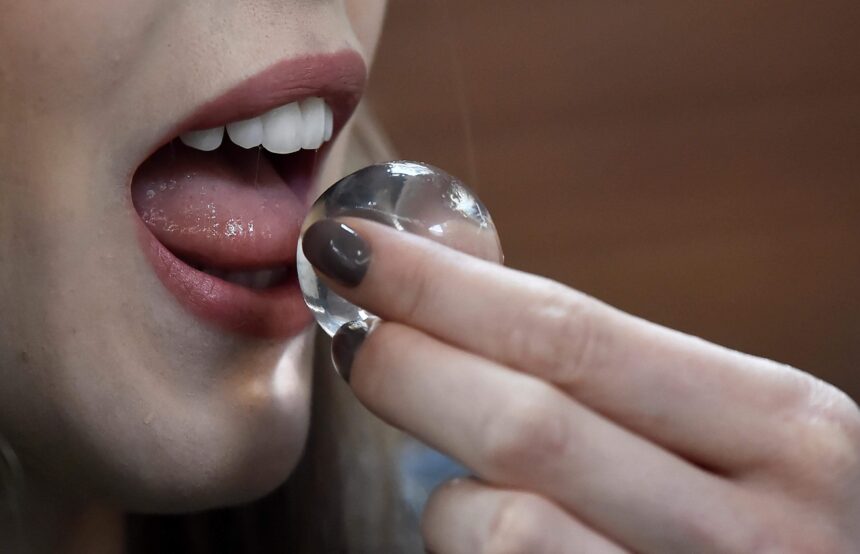
The full story of Ooho! is a fascinating tale of innovation, ambition, adaptation—and ultimately, pivoting into something even bigger. Here’s the journey:
Ooho put a spotlight on what’s possible when design meets environmentalism. Though it didn’t displace plastic water bottles completely, it propelled Notpla into a broader role in revolutionizing packaging materials.
Origins & Concept (2013–2014)
Founded in London by Rodrigo García González, Pierre Paslier, and Guillaume Couche—three industrial design students—as Skipping Rocks Lab, the team wanted to tackle plastic pollution with edible packaging
Inspired by molecular gastronomy techniques, they encapsulated water in a double membrane using spherification—brown seaweed extract (sodium alginate) and calcium chloride—creating bite-sized, tasteless water blobs for just a few cents each
Recognition & Momentum
Ooho! won the prestigious Lexus Design Award 2014 among others
Crowdfunding campaigns in 2017–2018 raised around £400k–£500k, allowing pilot projects at events like the London Marathon and music festivals
It gained global media buzz from Time, Fast Company, GreenMatters, Telegraph, and more .
Pivot to Notpla (2019)
In July 2019, Skipping Rocks Lab rebranded as Notpla (“not plastic”). They retained Ooho for niche contexts—cocktails, races, pop-ups—but shifted focus to durable, seaweed-based packaging for sauces, takeaway boxes, sachets, and pipettes
They’ve raised €6.3M and partnered with firms like Unilever and Just Eat, making biodegradable packaging that breaks down in 4–6 weeks
Real-World Challenges
Fragile form: Ooho didn’t pack well into bags or backpacks—membranes were delicate and often broke with rough handling
Short shelf-life: The edible membrane would shrink or degrade after a few days, limiting its practical lifespan to under 4–6 weeks
Packaging paradox: To sell in shops, Ooho would still need external protection or barcodes, putting a dent in its “plastic-free” mission
Ooho was a brilliant proof-of-concept—space age meets sustainability—but convenience, transportability, and shelf-life proved serious roadblocks for mass adoption.The pivot saw the technology scale into practical, eco‑friendly packaging solutions beyond just water.
As one Reddit user aptly put it:
“The company came to the same conclusion and shut down the project and shifted their brand.”
Home Recipe For Ooho !
What You Need
Ingredients:
Sodium alginate (~1‑2 g)
Calcium lactate (~5 g)
Drinking water (clean & chilled)
Tools:
Blender or immersion blender,Two bowls (one for alginate, one for calcium bath), Slotted spoon or ladleStep-by-Step Instructions
Prepare the sodium alginate solution
Mix 1g of sodium alginate with 1 cup (250 ml) of drinking water.
Use a blender to mix thoroughly until it’s fully dissolved. Let it rest for 15 minutes to remove air bubbles.
2. Prepare the calcium bath
In a second bowl, dissolve 5g of calcium lactate in 4 cups (1 liter) of water.
Stir until completely dissolved.
3. Create the water bubbles
Take a spoonful of the alginate water mixture and gently drop it into the calcium bath.
Let it sit for 30 to 60 seconds. The outer layer will form a gel membrane, while the inside stays liquid.
4. Rinse and serve
Gently remove the blob using a slotted spoon or strainer.
Rinse with clean water to remove any bitterness from the calcium solution.
Voilà! You now have your own edible Ooho water bubble!